Tongue-Tie & Frenectomy Treatment in Voorhees, NJ
When your child experiences a dental injury, prompt, gentle care makes all the difference. Dr. Jeffrey Singer provides expert treatment for chipped, loose, and knocked-out teeth in a comforting environment designed just for kids.
A restricted tongue movement can affect your child’s ability to eat, speak, and maintain proper oral health. When a thick or tight band of tissue limits tongue mobility, it creates challenges for feeding infants and developing clear speech patterns. Parents often notice difficulty with breastfeeding, speech delays, or dental concerns as early signs of this condition.
At ABC Children’s Dentistry in Voorhees, NJ, Dr. Jeffrey Singer provides gentle frenectomy procedures to help children overcome tongue restrictions and achieve healthy oral development. We create a comfortable, Disney-themed environment where your child feels at ease throughout every step of their treatment.
What Causes Tongue-Tie in Children?
Tongue-tie, medically known as ankyloglossia, occurs when the lingual frenulum — the small band of tissue connecting the tongue to the floor of the mouth — is too short, thick, or tight. This condition is present from birth and develops during fetal growth. The restricted tissue prevents normal tongue movement, creating functional challenges for babies and young children.
Research from the National Institutes of Health indicates tongue-tie affects approximately 4-11% of newborns, with boys experiencing the condition more frequently than girls. Genetic factors play a role in tongue-tie development, as families with one affected child often have others with similar restrictions. Some babies experience mild tongue restrictions causing minimal issues, while others face severe limitations affecting multiple aspects of development.
How Does Tongue-Tie Affect Feeding and Development?
Tongue movement plays a crucial role in infant feeding and speech development. Babies with restricted tongue mobility struggle to create the suction and wave-like motions needed for effective breastfeeding. Mothers often report painful nursing sessions, inadequate milk transfer, and babies who tire quickly during feeding. Bottle-feeding can present similar challenges when infants cannot move their tongues properly around the nipple.
Speech development suffers when tongue restrictions continue into toddler and preschool years. Children with untreated tongue-tie frequently have difficulty pronouncing sounds requiring precise tongue placement, particularly “t,” “d,” “z,” “s,” “th,” “r,” and “l” sounds. We see patients struggle with tongue elevation, making it hard to reach the roof of the mouth for certain consonants. Some children develop compensatory speech patterns, using alternative tongue positions to approximate difficult sounds.
Additional Complications of Untreated Tongue-Tie
Beyond feeding and speech concerns, tongue restrictions create dental health challenges. The limited tongue mobility affects oral hygiene, as children cannot effectively move their tongues to clear food particles from teeth surfaces. This increases cavity risk, particularly along the lower front teeth where the restricted frenulum attaches. We also observe gaps between lower front teeth, as the tight frenulum tissue prevents teeth from growing together naturally.
Older children and adults with persistent tongue-tie report social difficulties related to unclear speech and self-consciousness about tongue appearance. Some patients experience pain when attempting to extend their tongue fully, while others develop digestive issues from inadequate chewing and food breakdown. Early orthodontic evaluation can identify these concerns before they impact overall development.
What Happens During a Frenectomy Procedure?
A frenectomy is a simple surgical procedure that releases the restrictive tissue band to restore normal tongue movement. Dr. Singer evaluates your child’s tongue mobility by observing how far the tongue extends, whether it lifts to the roof of the mouth, and if the tongue tip can sweep along the upper teeth. We assess the frenulum’s thickness, attachment location, and overall impact on function before recommending treatment.
The procedure itself takes just minutes to complete. We begin by applying numbing medication to ensure your child’s comfort throughout the process. Dr. Singer carefully releases the tight frenulum using precise surgical techniques, freeing the tongue for improved mobility. The small incision requires minimal intervention, and bleeding is typically very light.
Most children return to normal activities immediately following their frenectomy. Infants resume feeding right away, often showing improved nursing ability within the first day. Older children may experience slight discomfort for a few days but can eat soft foods and participate in regular activities. We provide detailed aftercare instructions, including gentle tongue exercises to prevent tissue reattachment and maintain the improved range of motion.
When Should My Child Have a Frenectomy?
Early intervention provides the best outcomes for children with tongue-tie. We recommend addressing feeding difficulties in infancy to support proper nutrition and prevent maternal nursing complications. Babies who struggle with breastfeeding often benefit from immediate frenectomy evaluation, as improved tongue mobility can transform feeding success within days.
Speech-related tongue restrictions may become apparent between ages 2-4 years, when children rapidly expand their vocabulary and pronunciation skills. Parents notice persistent difficulty with certain sounds despite speech therapy efforts. Frenectomy before kindergarten allows children to develop clear speech patterns without the social and academic challenges of communication difficulties.
Is Frenectomy Right for Your Child?
Not every child with a visible frenulum requires surgical intervention. Dr. Singer evaluates functional limitations rather than appearance alone. We consider whether the tongue restriction actually impacts feeding, speech, or oral health before recommending a frenectomy. Some children with prominent frenulums have adequate tongue mobility for all necessary functions.
Parents should watch for specific signs indicating frenectomy may help their child. Infants who cannot extend their tongue past the lower gum line, babies creating clicking sounds during nursing, or toddlers with heart-shaped tongue tips when extended often benefit from evaluation. Older children struggling in speech therapy despite consistent effort may have physical restrictions limiting progress.
Frenectomy Recovery and Long-Term Outcomes
Recovery from frenectomy is remarkably straightforward for most patients. The small surgical site heals quickly, with complete healing occurring within 1-2 weeks. We recommend soft foods for several days following the procedure, avoiding crunchy or sharp foods that might irritate the healing area. Regular gentle cleaning with gauze helps prevent infection while the tissue repairs.
Post-procedure exercises are essential for maintaining the improved tongue mobility. Dr. Singer demonstrates specific movements encouraging a full range of motion and preventing the frenulum from reattaching with scar tissue. These simple exercises take just a few minutes several times daily and significantly improve long-term outcomes. Younger patients may need parental assistance with exercises, while older children quickly learn to perform movements independently.
The benefits of frenectomy extend throughout childhood and into adulthood. Babies show immediate feeding improvements, with nursing sessions becoming more efficient and comfortable for both mother and child. Children receiving frenectomies before age 5 typically develop age-appropriate speech with minimal additional therapy. We see improved dental health as children gain the ability to properly clean their teeth with tongue movements. Adults who had childhood frenectomies report enhanced quality of life through clear speech and comfortable oral function.
Pediatric Frenectomy Care at ABC Children's Dentistry
Dr. Jeffrey Singer brings years of experience treating tongue-tie in children throughout the Voorhees area. Our Disney-themed practice features animatronic parrots and arcade games, creating a welcoming atmosphere where children feel excited about their dental visits rather than anxious. We understand the unique needs of pediatric patients and use gentle techniques, ensuring your child’s comfort throughout their frenectomy procedure. Dr. Singer’s goofy, engaging personality helps children relax, transforming what could be a stressful experience into a positive one.
We work closely with families to address concerns about feeding difficulties, speech development, and oral health. Our practice accepts numerous PPO dental insurance plans to make quality pediatric dental care accessible. Whether your infant struggles with nursing or your preschooler shows signs of speech delays from tongue restriction, we provide comprehensive evaluation and treatment tailored to your child’s specific needs. Contact our office to schedule a tongue-tie evaluation and discover how we can support your child’s healthy development.

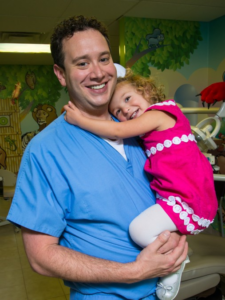
Meet Dr. Jeffrey Singer
Dr. Jeffrey Singer brings over 20 years of specialized pediatric dental expertise to families throughout South Jersey. As the founder of ABC Children's Dentistry in Voorhees, Dr. Singer combines exceptional clinical training with a uniquely compassionate approach that transforms routine dental visits into positive experiences children actually look forward to.
With advanced training in behavior management and hospital-based sedation dentistry, Dr. Singer provides complete pediatric dental services tailored to each child's unique needs. His expertise extends to treating children with special healthcare needs, ensuring every child receives comfortable, compassionate care in the safest possible environment.
Testimonials from Happy Parents
Visit Us
- 1001 Laurel Oak Rd STE E2, Voorhees Township, NJ 08043
- 856-783-3515
- Mon-Thurs 7:45 AM–4 PM, Fri 7:45 AM–3 PM